# Soils teach us to notice what’s in the background
[_Listen to an audio version of this essay read by the author here._](https://podcasts.apple.com/us/podcast/soils-teach-us-to-notice-whats-in-the-background/id1565190277?i=1000521473327)
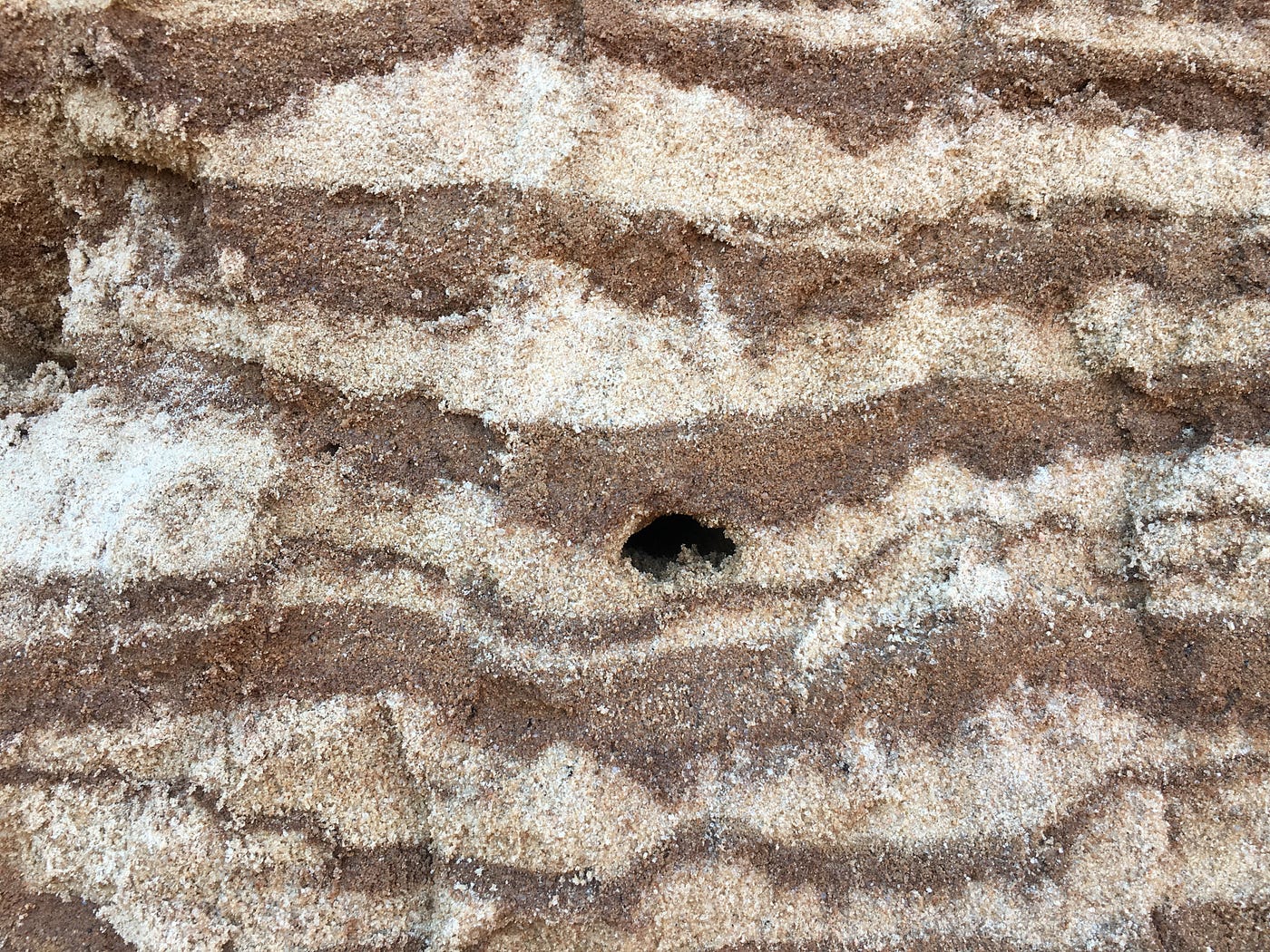
*Bands of clay accumulation, termed “lamellae”, in an otherwise sandy soil in Dresden, TN. Photo by the author.*
Soils are ubiquitous, and because of that they often fade into the background.
This might just be one of my most common refrains. I say it all the time. And it’s true, soils are everywhere! They are the foundation of terrestrial ecosystems. It’s also true that soils are easily taken for granted. Not just because they are everywhere, but also because soils literally make life on this planet possible. It’s still hard for me to wrap my head around that sometimes.
Soils have always been just about everywhere, and to some extent, soils will always be there.
So how do we keep soils in the forefront of our minds when we know they are prone to fall out of view? One way, I think, is to focus on the words we use to talk about soils. Let me give you a non-soil example of what I mean.
Since I started birding last year, I now notice how birds interact with my day to day life all the time. I am never not noticing birds, in the same way I am never not noticing soils. My husband and I were out hiking recently and we noticed a bunch of Western Grebes floating out on the lake. These birds are ubiquitous around here, they are always there, floating along, without exception. The Grebes are fixtures of this lake. I’ve never seen the lake without them.
I look through my binoculars and say, _“oh, it’s just a bunch of Grebes”_. I hear the words come out of my mouth and I wince. I remind us both, time and time again, that they aren’t “just” Grebes. They are Grebes — beautiful birds that make this lake what it is. They are part of the biodiversity that makes up the world around us. They are a reliable piece of nature that bring us comfort and consistency. We would be sad if one day the Grebes weren’t they anymore. These birds are so much more than _“just”_ Grebes.
Words matter. The way that we talk about things influences how we perceive them. It’s true for birds, and it’s true for soils. That’s why so many soil scientists get upset when people refer to soil as dirt. “Dirt” has a negative connotation, and it’s harder to see something as important and enchanting as soil in a positive light, when we use the term dirt to describe it. If we want to stop treating soil like dirt (and believe me, we do), we first need to develop the words to describe them and the eyes to see them.
Learning to see soil can help us live a life of active engagement with the world around us. It’s not just about becoming aware of the soils that make up the fabric of our landscapes. It’s about living in the present and recognizing all of the things that make up the “background” of our world. It’s about noticing and celebrating the plants, and birds, and insects around you even if you’ve seen them a million times before. The regular, the typical, the expected — these are the things that make our experience on this planet unique. And soil is the most ubiquitous of them all.
>This essay was originally published on Medium in May 2021. I migrated my favorite Medium essays onto my website to keep all my essays about soil in one place. Thanks for reading! You can also [listen to this essay](https://podcasts.apple.com/us/podcast/soils-teach-us-to-notice-whats-in-the-background/id1565190277?i=1000521473327).